European Automotive R&D: Simpler Electronics, Smarter Factories and Tighter Costs
A good technical idea now needs more than a strong specification. European carmakers are asking whether it can be reused across vehicles, introduced reliably in factories and delivered at a cost customers will pay. Announcements from 26–30 October show how those priorities are shaping engineering decisions.
Published
Volkswagen standardises its future electronics
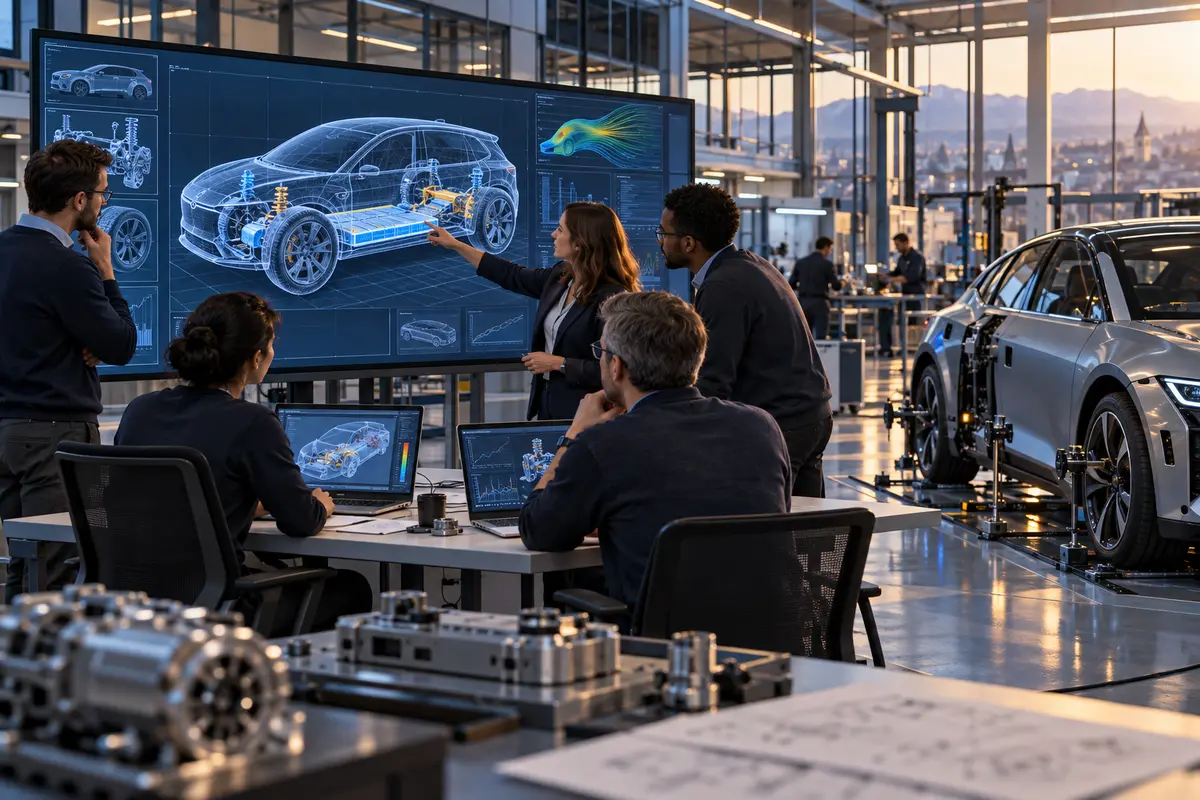
Volkswagen Group announced a strategic partnership with NXP on 26 October. NXP’s S32K5 microcontrollers—small computers that control vehicle functions—are intended as a shared building block for its future zonal architecture, developed by the Rivian–Volkswagen joint venture. The first vehicle using the architecture is planned for 2027.
Zonal architecture groups electronic functions by areas of the vehicle instead of relying on a separate control unit for each function. Volkswagen says this can consolidate hardware and support use across brands and vehicle segments.
Engineering perspective: fewer hardware types can simplify integration, but shared components also need robust fault containment, cybersecurity and supply-continuity planning. These are design considerations, not evidence of a fault in the announced system.
Driverless logistics moves beyond the pilot stage
BMW reported one million automated vehicle movements across four production sites on 27 October. Its Automated Driving In-Plant system uses infrastructure-mounted LiDAR—sensors that measure distances with light—alongside cloud services and motion-planning software to move vehicles through defined factory and logistics areas.
Volkswagen separately announced the conclusion of a two-year logistics project at Emden on 28 October. With Telekom, Unikie and BIBA, it tested automated vehicle movement using public 5G and edge computing, which processes data close to where it is needed.
The distinction matters: BMW describes a system already scaling across plants; Emden is a completed trial. Neither announcement establishes that driverless logistics is ready for every factory or mixed-traffic environment.
Product-development perspective: assess interventions, availability, safety validation and cost per movement before treating automation as a repeatable saving.
Engineering and procurement meet earlier
Volkswagen’s 28 October supplier announcement describes closer cooperation between technical development and procurement while product concepts are still taking shape. Teams assess whether to develop a technology internally, co-develop it, partner or buy an established solution.
This can reduce costly changes after a concept has been fixed. Our practical takeaway: decide early who owns interfaces, validation evidence and strategic knowledge. A lower purchase price alone does not settle the make-or-buy decision.
Cost pressure reaches the product portfolio
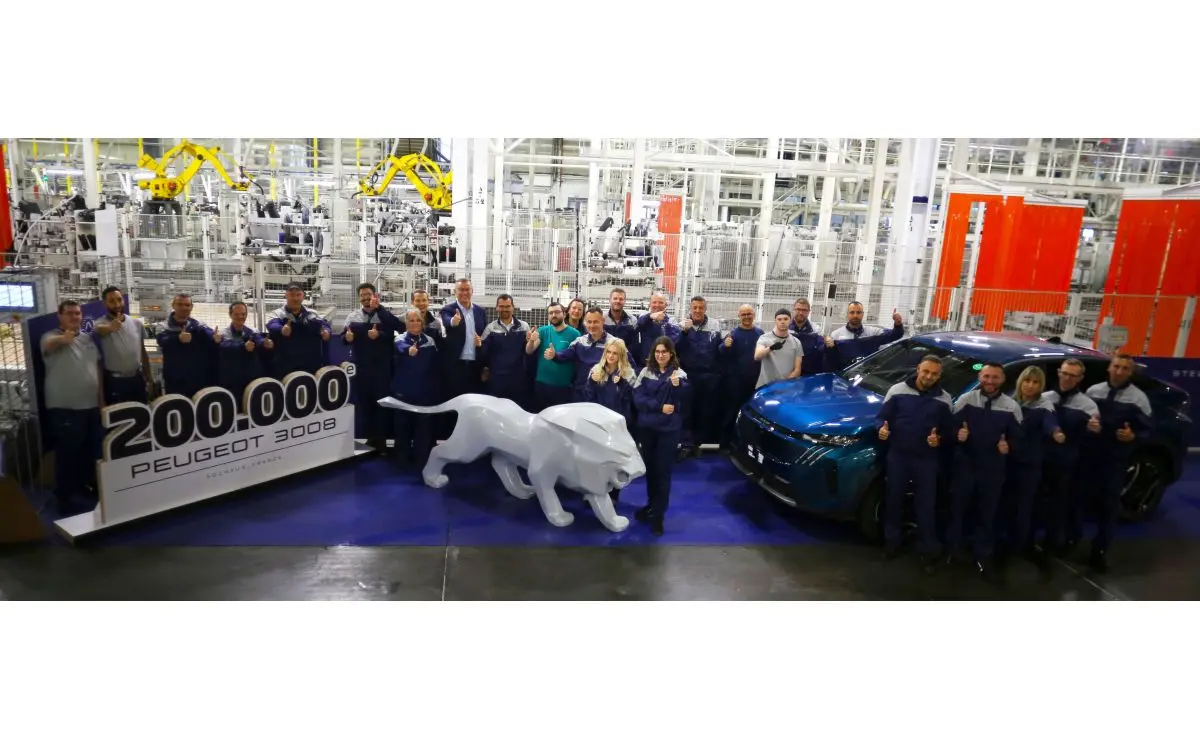
Volkswagen’s 29 October nine-month update links its cost programme to a narrower model range, simpler structures, better vehicle costs and faster technology development. It identifies tariffs, competition and lower current earnings from electric vehicles as pressures.
Stellantis reported progress in its Value Creation Program in its 28 October results, while its quarterly industrial free cash flow remained negative. Its update also flags additional memory-chip and recall costs ahead.
For technical product managers, our interpretation is that variants and features will face tougher justification. Common platforms, reusable software and measurable customer benefit become more valuable when engineering resources are constrained. This does not confirm that any particular feature will be cancelled.
What deserves a closer look
The next test is execution: whether shared electronics arrive on schedule, whether automated movements deliver sustained savings and how cost programmes change actual development priorities.
- Common electronics: monitor validation, launch readiness and supplier resilience.
- Factory automation: ask for operating results, including exceptions and interventions.
- Portfolio decisions: compare engineering effort and lifecycle cost with customer value.
Scope of this update
This is a selected roundup of company announcements, not an exhaustive review of European automotive R&D. It does not assess new battery chemistry, road-vehicle driving-assistance regulation, crash requirements or interiors. Company performance claims have not been independently audited for this article.
Sources
- Volkswagen–NXP partnership · 26 October 2026
- BMW: one million driverless vehicle movements · 27 October 2026
- Volkswagen: Emden automated logistics project · 28 October 2026
- Volkswagen: development and procurement · 28 October 2026
- Volkswagen: nine-month results · 29 October 2026
- Stellantis: third-quarter results · 28 October 2026
Standardisation, automation and cost control are converging. The engineering challenge is to simplify products and processes while protecting reliability, safety and the capabilities that matter to customers.
Read more industry updates →Engineering implications are Globe Pravasi’s analysis. Plans and expected benefits may change; consult the linked company announcements for their stated scope.
Join the conversation
Loading likes and comments…