Europe’s Automotive R&D Shift: Common Software, Integrated Electronics and Tougher Portfolio Choices
Europe’s automotive industry is entering a more disciplined phase of product development. This week’s announcements point to three priorities: common software architectures, greater component integration and tighter control of development costs. Innovation remains important, but each technology must demonstrate industrial scalability and a credible business case.
Published
Europe pushes towards common vehicle software
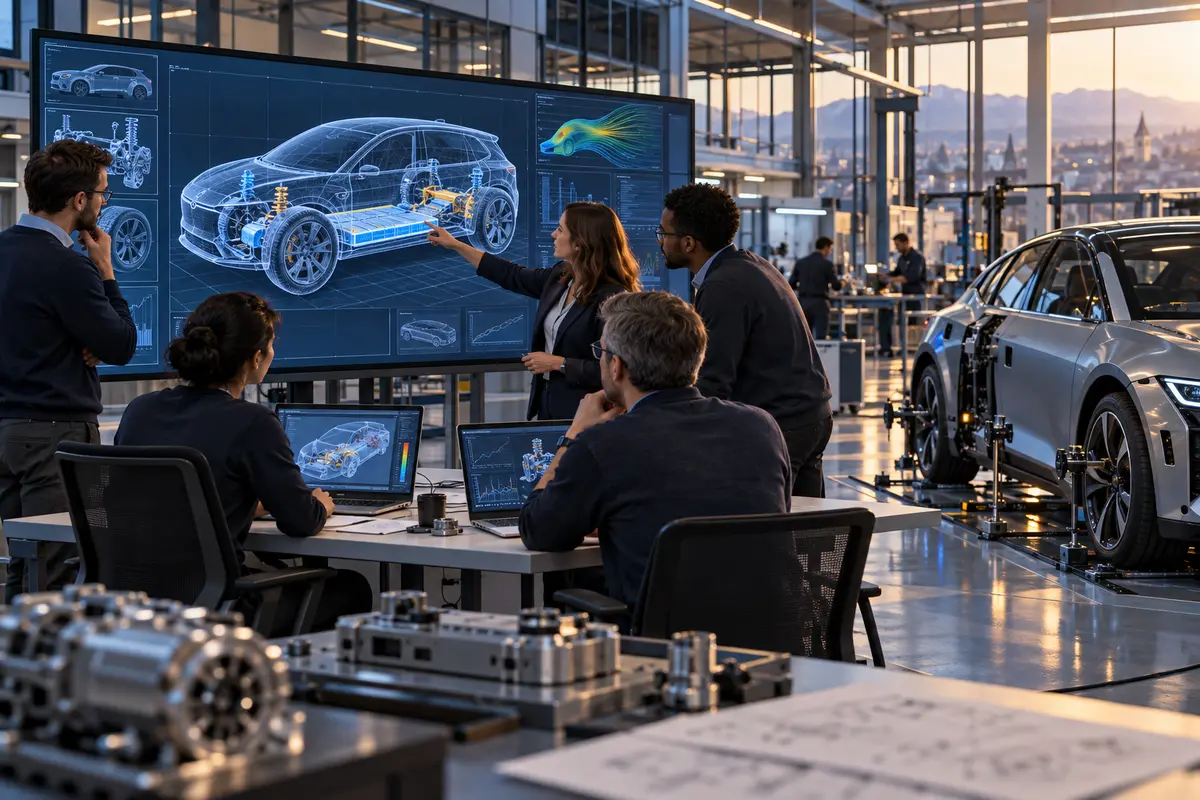
In its 9 October announcement, the European Commission outlined ECAVA’s technology roadmaps, scheduled for presentation in Paris on 12 October. ECAVA means European Connected and Autonomous Vehicle Alliance. The work covers software-defined vehicles, automotive hardware, autonomous-driving technology and deployment.
Common interfaces could reduce duplicated development work and help manufacturers and suppliers reuse software across vehicle programmes. The approach is a roadmap, rather than an implemented industry standard or one mandatory technology stack.
Product-development impact: software interoperability—systems working together—and supplier integration could become important architecture decisions earlier in vehicle development. Turning the plans into products will require industrial commitment, funding and clear delivery milestones.
- Common architecture contracts and reusable open-source software components.
- A European chiplet-based computing platform: smaller processing components combined into a flexible system.
- A shared approach to data, AI and the automated-driving software stack.
- Commercial deployment of Level 4 automated mobility: driving without human intervention within defined operating conditions.
FORVIA HELLA integrates battery and power electronics
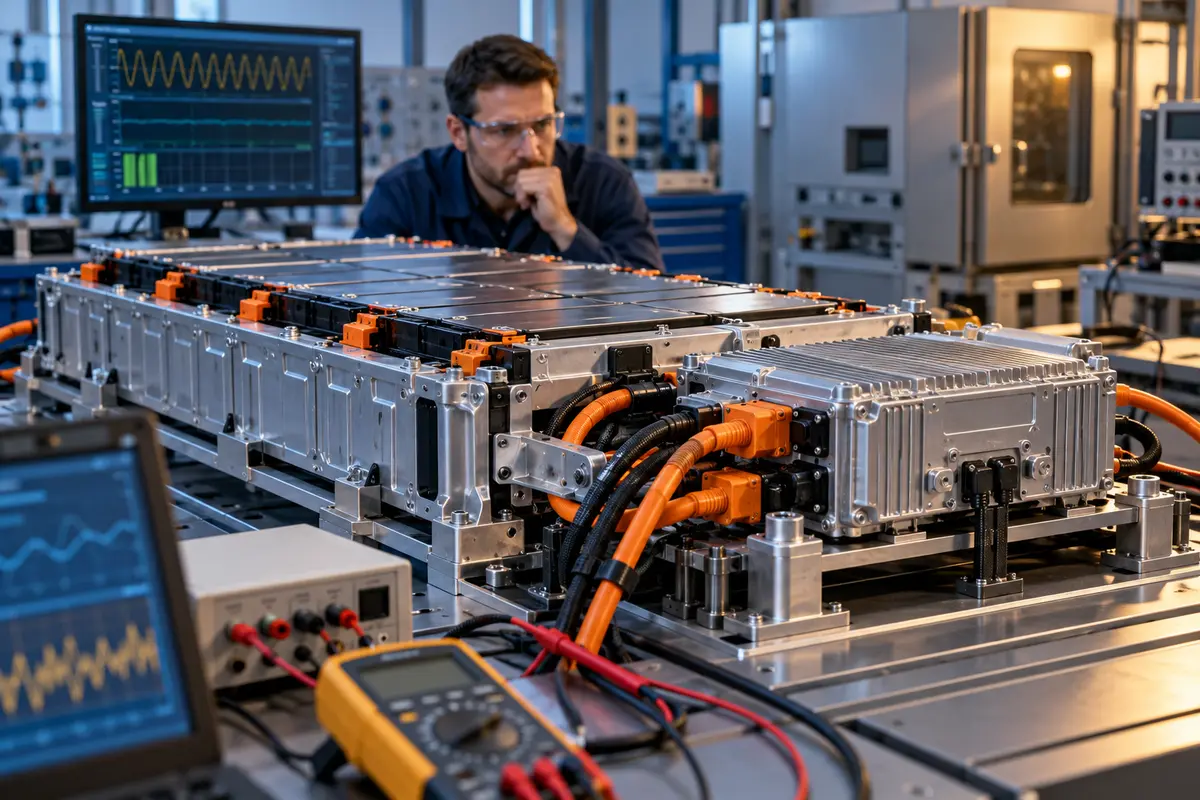
On 8 October, FORVIA HELLA announced major series orders for two integrated EnergyCore products. The first combines the battery management unit, cell measurement units and battery junction box in a high-voltage system. The second combines a low-voltage DC/DC converter—a device that changes voltage levels—with 48-volt battery management.
Series production is scheduled to start in December 2027 and spring 2028 respectively. FORVIA HELLA says integration reduces components, wiring, space, weight and system cost.
Product-development impact: combining functions increases the importance of clear responsibilities for interfaces, failure modes, thermal management, diagnostics, cybersecurity and serviceability. These are engineering implications, rather than additional performance claims from the announcement.
Porsche reshapes its development portfolio
Porsche’s 7 October strategy announcement emphasises profitability under its Value over Volume approach: earning more value per vehicle rather than relying on higher sales volumes. It plans fewer model variants and a lower break-even point while retaining combustion, plug-in-hybrid and battery-electric products.
The announcement reiterates the planned closure of Cellforce development and production activities. That closure was already announced earlier in 2026; it is not a new decision originating this week.
Product-management impact: maintaining several powertrain technologies provides market flexibility but adds architecture, testing and manufacturing complexity. Portfolio reviews need to consider variant complexity, component reuse and engineering investment per vehicle alongside technical performance. The Cellforce decision also raises questions about which battery capabilities to retain internally and which to source through partners.
ProLogium presents a new battery-electrolyte concept
In its 8 October announcement ahead of the Paris Motor Show, ProLogium introduced its Gen4 Dynamic Coordination Network electrolyte architecture. An electrolyte is the material that allows ions to move within a battery. The company reports fast charging, cold-weather performance and reduced reliance on high stack pressure—the force used to maintain contact between cell layers.
Mercedes-Benz has priority access to Gen4 cells under a joint testing agreement. ProLogium also plans to showcase module and prototype collaborations with FEV and OPmobility.
The performance claims need careful qualification. ProLogium cites SGS-witnessed conductivity results, while its charging, cycling and cold-temperature figures are attributed to internal testing. That does not establish production-vehicle performance.
Product-development impact: vehicle-level validation, long-term durability and manufacturing consistency remain key questions. Engineers should assess pack integration, thermal behaviour, crash safety, manufacturing cost and repeatability alongside cell performance.
Digital twins move closer to mainstream development
At the Aachen Colloquium, Hyundai Motor Group’s 6 October announcement linked digital twins and virtual validation with a vehicle-data flywheel. A digital twin is a virtual representation used to study a physical system; the data flywheel is a repeated cycle of collecting data, improving models and feeding results back into development.
The Group’s strategy spans battery-electric, hybrid, range-extender and fuel-cell vehicles. Its approach illustrates how simulation and field-data feedback can complement physical prototypes.
Product-development impact: digital models must be checked against physical testing and supported by reliable data governance. Virtual validation can shorten programmes only where accuracy, limitations and traceability are understood.
Scope of this week’s update
This selection focuses on software, electrification, development methods and portfolio decisions. The source announcements reviewed here do not establish a new EU vehicle-safety or type-approval requirement. Type approval is the process used to confirm that a vehicle meets applicable regulatory requirements.
This is a selected industry briefing, not an exhaustive review of all regulation, sustainable materials, seating or interior developments.
Outlook
The most consequential development is the pressure to connect technical innovation with programme speed, component reuse and profitability. For engineering and product teams, the practical question is whether a technology reduces total programme complexity—or merely moves it to another interface.
- Watch whether European manufacturers make concrete commitments to ECAVA’s shared software approach following the 12 October presentation.
- Look for independent and vehicle-level evidence supporting ProLogium’s performance claims.
- Track how Porsche structures future battery partnerships and retains the capabilities it needs after the planned Cellforce closure.
Sources
- European Commission, 9 October 2026: ECAVA’s upcoming Paris roadmap presentation
- FORVIA HELLA, 8 October 2026: EnergyCore series orders
- Porsche, 7 October 2026: strategy through to 2035
- Porsche, 8 May 2026: earlier announcement of planned subsidiary closures
- ProLogium, 8 October 2026: DCN electrolyte announcement
- Hyundai Motor Group, 6 October 2026: Aachen Colloquium development strategy
Assess innovation through the full programme: integration, validation, reuse, manufacturing and business case. A promising technology is only one part of a production-ready product.
Browse more industry updates →Industry information and editorial analysis as of 11 October 2026. Company claims, planned production dates and roadmap ambitions are not guarantees. Product-development implications are Globe Pravasi’s interpretation. Illustrations are fictional and do not depict named companies’ facilities or products.
Join the conversation
Loading likes and comments…